A logo system, not a logo file: what the handover should contain

A logo handover is complete only when any good designer, printer, or developer can use the mark correctly without asking the original designer.
Key Takeaways:
A logo file alone is not a handover.
The system must cover size, colour, and spacing.
Clear rules protect the brand after launch.
Why a single file fails
Many founders receive one logo file, usually a single image, and call the job done. Weeks later, problems appear. The mark looks blurred on a signboard, washed out on a dark background, or stretched on a website header. The printer asks for a different format. The social team crops the mark to fit a circle, and the brand starts to look different everywhere.
None of this means the mark itself was weak. It means the handover was thin. It must survive signs, packs, apps, uniforms, and small phone screens, in the hands of people who never met the designer. A logo design agency in Noida should therefore hand over a system, with rules a stranger can follow, not just a file a founder can admire.
What a complete handover contains
First, the mark itself, in every form it will need. That means a primary mark, a stacked version for tall spaces, a horizontal version for headers, and a simple icon or monogram for small spaces and app icons. Each version should be supplied in formats for print and for screen, so no one has to redraw or stretch anything.
Second, colour rules. The handover should state the exact brand colours for print and for screen, plus how the mark looks on light backgrounds, on dark backgrounds, and on photographs. A mark that only works on white will fail on a dark website header or a coloured pack. Show the approved variations, and show the ones to avoid.
Third, clear space and minimum size. Every mark needs breathing room, stated as a simple rule, such as the height of one letter or one element of the mark. Minimum size matters too: below a certain size, fine detail disappears, and a simplified version must take over. Without these rules, well-meaning teams crowd the mark or shrink it until it is unreadable.
Fourth, type and voice rules. The handover should name the brand typefaces, or the closest safe alternatives, and show how headings, body text, and captions should look. It should also state the brand voice in one line, so captions, ads, and replies sound like the same brand.
The part founders often skip
The part most often skipped is the "do not" page. A good handover shows, with simple examples, what must never happen: no stretching, no recolouring, no shadows, no new typefaces, no placing the mark on a busy photograph without a clear backing. These examples save more brand damage than any number of approved versions, because they stop the most common mistakes before they spread.
File naming matters too. Clear folders, such as print, screen, light background, and dark background, get used, while vague names get ignored and teams make their own versions.
A hotel chain logo design case shows why this matters: a hotel mark must work on signage, on key cards, on uniforms, on booking pages, and on small app icons, all at once. A single file cannot carry that range. A system can, because each use has an approved version ready.
How to check a handover before accepting it
Before accepting a handover, run a simple test. Give the files to someone outside the project, with no explanation, and ask them to place the mark on a light page, a dark page, and a small social avatar. If they can do all three without asking questions, the handover works. If they ask what format, what colour, or what spacing to use, the handover still has gaps.
Also check the mark at real sizes: print it small, view it on a phone, and place it on a photograph. A mark that only looks good large, on white, is not ready.
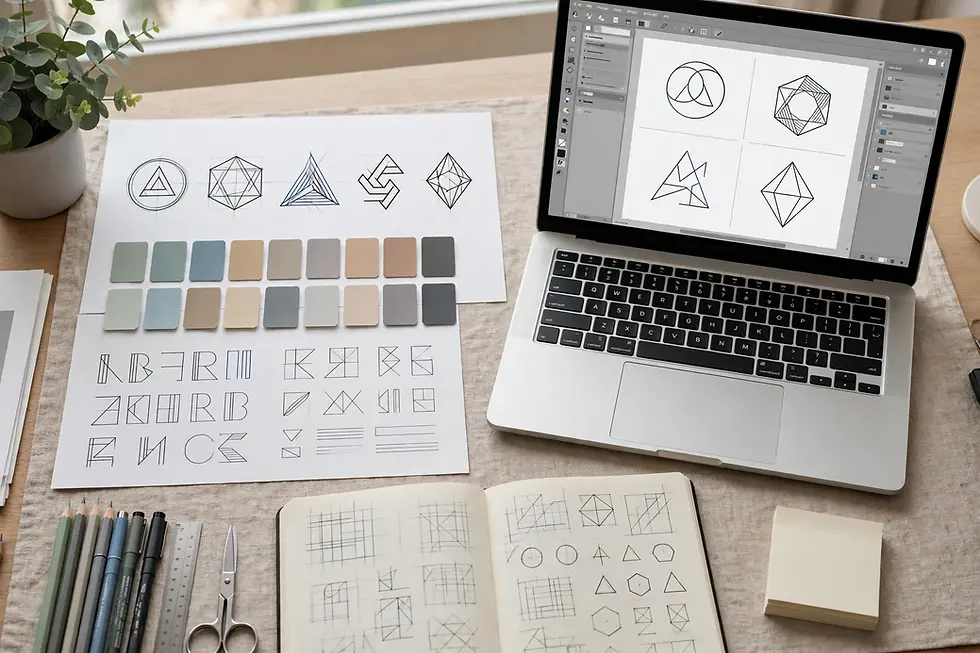
Comparison table
Single logo file | Complete logo system |
One image, one size | Primary, stacked, horizontal, and icon versions |
Colours unclear | Exact print and screen colours stated |
Spacing guessed | Clear space and minimum size rules given |
Misuse spreads fast | "Do not" examples stop common mistakes |
Result is drift | Result is one brand, everywhere |
Frequently asked questions
What should a logo handover include?
A logo handover should include the primary mark plus stacked, horizontal, and icon versions, in print and screen formats, with colour, clear space, and minimum size rules. It should also include type guidance and a simple "do not" page. A single image file, however beautiful, is not a complete handover, because it cannot cover every real use.
Why is a logo system better than a single logo file?
A logo system is better because one file cannot work on signs, packs, apps, uniforms, and small screens all at once. A logo design agency in Noida supplies approved versions for each use, so teams never need to stretch, recolour, or redraw the mark. The system keeps the brand looking like one brand, in every place it appears.
How many logo versions do we really need?
Most brands need four: a primary mark, a stacked version for tall spaces, a horizontal version for headers, and a simple icon for small spaces and avatars. Each version should exist in print and screen formats, and in light and dark variations where needed. More versions are fine, provided each one has a clear job and a clear name.
What are clear space and minimum size rules?
Clear space is the empty area that must surround the mark, so nothing crowds it, usually stated as the height of one element of the mark. Minimum size is the smallest size at which the full mark stays readable; below that, a simplified icon must be used. Both rules protect readability, especially on small screens and crowded pages.
Which file formats should a handover contain?
A handover should contain print formats for signage and packaging, and screen formats for websites, apps, and social pages, so no team has to convert or redraw anything. File names should state the version, the background, and the format plainly. Clear naming gets the files used; vague naming leads teams to make their own versions.
How should a logo work on dark backgrounds?
A logo should have an approved light version for dark backgrounds, tested on the actual dark colours the brand uses, not only on black. The light version must keep the same spacing and proportions as the primary mark. Never simply invert colours without checking, because fine detail and contrast can fail on dark surfaces.
What belongs on the "do not" page?
The "do not" page should show, with simple examples, the mistakes to avoid: stretching, recolouring, adding shadows, changing typefaces, and placing the mark on busy photographs without backing. These examples stop the most common damage before it spreads across teams. A short "do not" page is often the most used page in the whole handover.
Should a logo handover include brand colours and type?
Yes, a handover should state exact brand colours for print and for screen, and name the brand typefaces or the closest safe alternatives. Colour and type are part of the system, because a mark paired with random colours and typefaces stops looking like the same brand. Keep both lists short, so teams can actually follow them.
How do we test a logo system before launch?
Test it by giving the files to someone outside the project, with no explanation, and asking them to place the mark on a light page, a dark page, and a small avatar. If they finish without questions, the handover works. Also print the mark small and view it on a phone, because a mark that only works large is not ready.
When should a logo system be updated?
Update it only when a real use fails, such as a new app icon size or a colour that fails in print. Add the new version, tell every team at once, and avoid frequent redesigns, because trust grows from the same mark, used well, over time.
Closing
A logo file impresses for a day. A logo system protects a brand for years. Ask for versions, colours, spacing, type, and clear "do not" rules, and test it with a stranger before launch. When anyone can use the mark correctly without asking, the handover is done.



Comments