A restaurant reel that drives footfall in Noida: hook, dish, location, offer

A restaurant reel drives footfall when it gives one clear reason to visit today, not just a pretty plate.
Key Takeaways:
Hook first, dish second, location and offer last.
Film the real dish, the real room, and the real route.
End every reel with one simple visit step.
Why most restaurant reels get views but no tables
A reel can travel far and fill no tables. A slow shot of steam, a trending sound, and a clever caption earn saves and shares from people who live nowhere near the restaurant. Footfall comes from a smaller group: people nearby, hungry now, choosing between two or three places for lunch or dinner.
Those people ask practical questions. What should I order? Where exactly is it? Is it open now? What will it cost, and is there a reason to go today rather than next week? A reel that answers none of those questions is a food film. A reel that answers two or
three, then gives one visit step, is a booking tool.
A restaurant social media marketing Noida plan therefore starts from the table, not from the trend. Every reel should end with the same test: could a viewer in Noida decide, in under a minute, to come here today?
The four parts, in order
First comes the hook. The first two seconds must name the dish or the craving, not the brand. "The butter chicken Noida keeps ordering on Sundays" beats a logo shot, because it speaks to hunger, not to the restaurant.
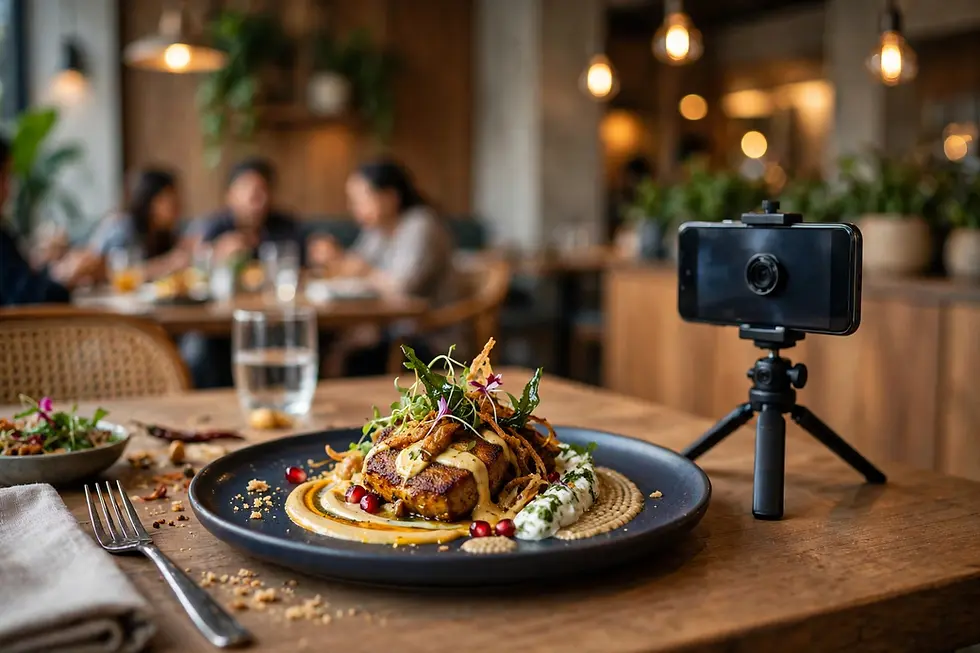
Second comes the dish. Show the plate as the guest will actually receive it, in honest light, with one close shot of the first bite or the first pour. Skip heavy filters that make the dish look like a different dish on arrival. Guests who feel misled rarely return, and they tell friends.
Third comes the location. Show the sector, the landmark nearby, and the walk from the metro or the parking spot. A dish without a route is hard to visit. A short shot of the entrance, filmed in daylight, removes the doubt that keeps people scrolling.
Fourth comes the offer. Give one reason to come today: a lunch thali, a family platter, a weekend dessert, or a first-visit tasting. One offer, stated plainly, beats three offers competing in one caption.
Film on a real service day
The best restaurant reels are filmed during real service, not on a closed set. Real steam, real plates leaving the kitchen, and a real busy room tell a viewer what dinner will actually feel like. A staged empty room looks calm, but it also looks unpopular.
Keep the shoot short and honest. Film the kitchen team at work, the dish being plated, and one table enjoying the meal, with permission. Avoid filming guests who have not agreed to appear. A reel built on real service also gives the team content for the week,
because one shoot can yield a hook reel, a dish reel, and a room reel.
A restaurant branding case study makes the same point in another form: the brand earns trust when the food, the room, and the story all agree. When a reel promises a warm room and a generous plate, the visit must deliver both.
What to post each week
A weekly rhythm keeps footfall steady without exhausting the team. Post one signature dish reel, one room or location reel, and one offer reel, and let the rest of the week carry replies, reviews, and guest photos. Reply to every "where is this" and "is this open today" comment the same day, because that comment is a visit waiting to happen.
Track footfall, not only views. Ask new guests, simply and politely, how they found the place. Note which reel type brings tables: dish reels, location reels, or offer reels. Put more effort behind the type that fills tables, and treat views as a secondary signal of reach.
Comparison table
View-only reel | Footfall reel |
Opens with logo or steam only | Opens with a clear hook about one dish |
Hides location and timings | Shows sector, landmark, and route |
No reason to visit today | Gives one plain offer for today |
Replies are slow or missing | Replies answer location and timing fast |
Result is views | Result is tables filled |
Frequently asked questions
Why does our restaurant reel get views but no footfall?
Views come from anyone who enjoys food footage, while footfall comes from nearby people who can act on the reel. If the reel hides the location, the timings, or the visit step, a hungry viewer cannot move forward. Show the dish, the route, and one offer, and make the visit step easy to follow.
What should the first two seconds of a restaurant reel show?
The first two seconds should name the dish or the craving, because a viewer decides fast whether to keep watching. A restaurant social media marketing Noida reel that opens with the signature plate, rather than a logo, holds attention longer. The brand can follow, but hunger must lead, since hunger is what brings the visit.
How long should a restaurant reel be?
Keep it short enough to finish, usually well under a minute, with the hook, the dish, the location, and the offer all inside that time. A long reel that loses viewers before the offer cannot drive footfall, however good the food looks. Cut anything that does not help a viewer decide to visit.
Should we show prices in the reel?
Showing a price range or a clear offer helps viewers who are comparing places, because it removes a reason to delay. If prices change by season or by portion, state the starting price and send viewers to the menu for exact rates. Hiding price entirely often sends the viewer to a competitor who states it.
Do we need paid promotion for restaurant reels?
Paid promotion helps only after a reel already brings table enquiries on its own, with a clear dish, a clear route, and a fast reply. Boosting a reel with no visit path only buys more views. Test organically first, then promote the reels that bring real questions about location, timings, and bookings.
How fast should we reply to location and timing questions?
Reply the same day, ideally within hours, because hungry viewers often shortlist two or three places for the same meal. A slow reply hands a warm table to a faster restaurant, however good the reel was. Agree who replies, what the first reply confirms, and how directions and timings are shared.
Should every reel push an offer?
Every reel should move the viewer one step closer, but not every reel must push an offer in the same way. Mix dish reels, room reels, and guest experience reels with direct offer reels, so the account builds trust between offers. The direct reels then convert trust that the other reels built.
What is the biggest mistake in restaurant reels?
The biggest mistake is filming a dish that guests will not recognise on arrival, through heavy filters, staged props, or portions that never leave the kitchen. Guests feel misled within minutes, and that feeling shows up in reviews. Film the real plate in natural light, and let the visit match the reel.
How do we measure a restaurant reel?
Measure table enquiries, walk-ins that mention the reel, and bookings that come from it, not views alone. Track which reel type fills tables: dish reels, location reels, or offer reels. Put more effort behind the type that brings guests, and treat views as a secondary signal of reach.
Can one reel work for lunch and dinner crowds?
One reel rarely serves both well, because lunch guests ask about speed and value, while dinner guests ask about ambience and sharing plates. Make separate short reels for each crowd, with the dish and the offer suited to them. Two focused reels will usually fill more tables than one reel that tries to please everyone.
Closing
A reel that drives footfall is planned backwards from the table. Show one dish people crave, show how to reach it, and give one reason to come today. When the reel, the profile, and the visit all point the same way, views stop being the goal and full tables become the result.


Comments