Shooting a brand film in-house vs hiring a crew: cost, speed, control

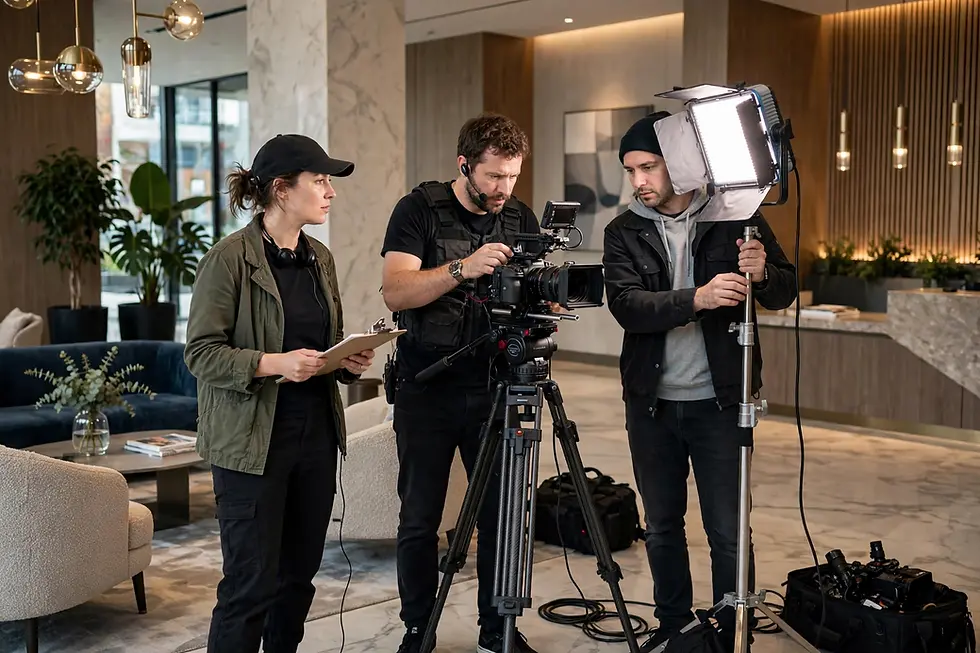
A hired crew wins on craft, in-house wins on speed - choose by what the film must do.
Key Takeaways
In-house suits fast, simple, repeatable films.
A crew suits films that must persuade at first viewing.
Judge cost by total cost, not the shoot day alone.
What in-house filming really costs
In-house filming looks cheap because no crew invoice arrives. The real cost hides elsewhere: staff hours, learning time, equipment, editing, and retakes when a shot fails. A short film that occupies a team for three days can cost more in lost work than a one-day professional shoot.
That does not make in-house filming wrong. For quick updates, behind-the-scenes
clips, and simple demonstrations, an in-house team moves fast and keeps the tone natural. The test is plain: if the film only needs clear information and a friendly face, in-house is often enough.
A video production company Noida is worth considering when the film must carry the brand alone - on a homepage, at an event, or inside a paid campaign. In those places, weak lighting, unclear sound, or unsteady framing quietly lowers trust, even when viewers cannot name the fault.
What a hired crew actually brings
A hired crew brings planning, not just people. Before the shoot, the crew plans the story, the shots, the locations, and the sound. On the day, each person has one job: camera, light, sound, direction. That focus is why a crew day looks calm while an in-house shoot often feels rushed.
The edit is where the difference shows most. A professional editor cuts for pace,
removes weak moments, and matches music to the message. The result is a film that feels finished the first time a viewer sees it, rather than a film that needs explaining.
A crew also brings equipment that an in-house team rarely owns: controlled lighting,
clean audio, and stable camera movement. Those details do not shout, but viewers feel them as quality.
Control, speed, and quality together
Control is the in-house team's strongest argument. A brand can change a line, reshoot a scene, or post the same day without waiting for a crew schedule. That freedom matters for social content, where speed often beats polish.
A crew trades some of that instant control for planned control. The brand approves a
brief, reviews a rough cut, and requests changes in rounds. The process feels slower, but it prevents the endless tweaks that can drag an in-house film on for weeks.
Quality is not only about cameras. It is about story, sound, and editing working together. A hotel brand film case study shows how a single well-planned film can carry a hotel's story across its website, social channels, and booking pages. The lesson is not that every brand needs a crew - it is that flagship films deserve flagship treatment.
Factor | In-house filming | Hired crew |
Cost | Staff time and equipment, spread out | One clear fee, higher on the day |
Speed to start | Fast | Slower to book |
Speed on shoot day | Often slow to finish well | Fast, planned day |
Picture and sound | Good enough for simple clips | Controlled light, clean sound |
Story and edit | Depends on one person's skill | Planned story, professional edit |
Control | Full, instant changes | Through brief and reviews |
Best use | Frequent, simple content | Flagship films and campaigns |
Frequently asked questions
1. Is in-house filming always cheaper than hiring a crew?
Not always. In-house filming saves the crew fee, but it uses staff time, equipment, and editing hours. When those hidden costs are added, a simple professional shoot can cost less overall, especially for a flagship film.
2. When should a brand hire a crew instead of filming in-house?
Hire a crew when the film must persuade at first viewing, such as a homepage film, a campaign launch, or a hotel film. A video production company Noida can plan the story, light, sound, and edit so the film looks finished from the first second.
3. How long does a professional brand film take?
A simple brand film often takes two to four weeks from brief to final edit, including planning, shoot, and reviews. Complex films with multiple locations or actors take longer, but a clear brief keeps the timeline honest.
4. Can an in-house team improve film quality quickly?
Yes, with three fixes: clean audio, steady camera movement, and good light on faces. Those three changes lift most in-house clips more than a new camera alone.
5. What should a crew brief include?
A good brief states the film's purpose, the audience, the key message, where the film will be shown, and the deadline. It should also list any must-include shots and any lines the brand must not cross.
6. Does a crew remove all control from the brand?
No. The brand controls the brief, approves the story and rough cut, and requests changes in review rounds. The crew controls the craft, so the brand does not need to manage every technical choice.
7. How many review rounds should a brand expect?
Two rounds are normal: a rough cut review for structure and message, then a final review for small fixes. More rounds are possible, but they should be agreed in advance so the edit does not drag on.
8. What makes a brand film look cheap, even with good equipment?
Unclear sound, shaky movement, harsh light, and a story that wanders. Viewers forgive a simple picture, but they notice poor sound and a weak opening within seconds.
9. Should small brands ever hire a crew?
Yes, for one flagship film a year. A single strong film can be cut into shorter clips for social channels, a website, and events, so the cost spreads across many uses.
10. How do I judge whether the film worked?
Judge by the film's purpose: enquiries, bookings, shares, or time watched. Set one main measure before the shoot, so the result is judged on the job the film was hired to do, not on likes alone.
Closing
In-house filming and hired crews are not rivals - they are tools for different jobs. Use in-house speed for frequent, simple content, and hire a crew when the film must carry the brand. That split keeps costs honest, quality high, and control where it belongs.
Tags: brand film, video production, in-house vs crew, Yantra Media



Comments